KDP Number Tracing for Kids Sheet 019: Streamlining Preschool Workbook Creation
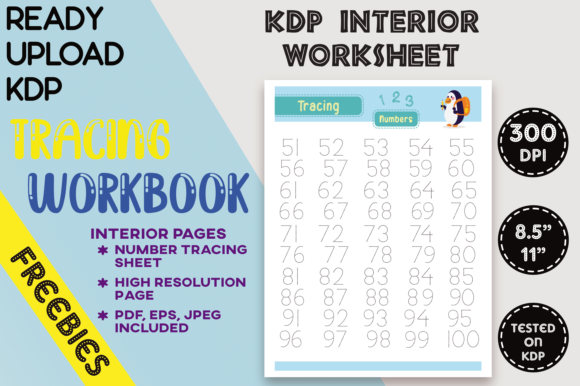
Creating low-content books for Amazon KDP often feels like a race against time, especially when targeting the evergreen preschool education niche. KDP Number Tracing for Kids Sheet 019 addresses one of the most significant bottlenecks in this process: generating high-quality, age-appropriate interior content that meets strict printing standards. This specific resource focuses on the critical learning milestone of numbers 51 through 100, providing a ready-to-upload solution that eliminates the technical guesswork from self-publishing educational materials.
For publishers and creators aged 20 to 50 who are balancing side hustles with full-time careers or parenting, this asset serves as more than just a digital file. It represents a strategic shortcut. Instead of spending dozens of hours designing individual tracing guides or worrying about margin bleed, you gain immediate access to professionally formatted interiors. The inclusion of PDF, EPS, and JPEG formats ensures compatibility across various design workflows, whether you are assembling a book directly in Canva, Adobe InDesign, or Affinity Publisher.
Real-World Applications for Self-Publishers
The primary value of these tracing sheets lies in their versatility across different publishing strategies. While the obvious use case is creating a standalone "Learn to Write Numbers 51-100" workbook, experienced KDP creators often integrate this asset into broader projects to increase perceived value and page count without additional effort.
Expanding Existing Series
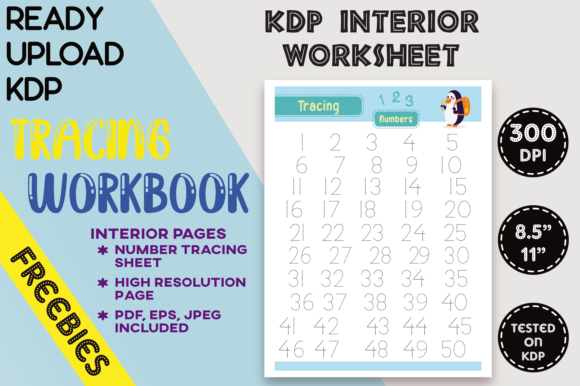
If you already have a successful number tracing book covering 1–50, KDP Number Tracing for Kids Sheet 019 provides the logical next step. Many parents look for sequential learning tools. By having this pre-formatted sequel ready, you can quickly capture repeat customers who trust your brand. The consistent 8.5 x 11-inch sizing and 300 DPI resolution ensure that the new volume matches the print quality and aesthetic of your previous publications, maintaining series cohesion.
Bundling for Higher Price Points
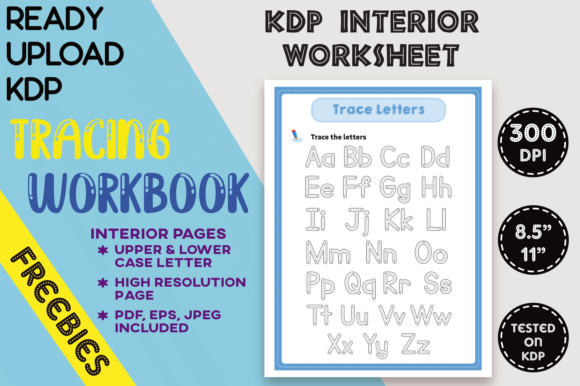
Standalone thin workbooks can sometimes struggle with profitability due to fixed printing costs. A practical strategy involves combining these 51-100 tracing pages with alphabet practice, shape drawing, or scissor skills activities to create a comprehensive "Preschool Prep Bundle." Because these files are tested and ready for KDP, they slot seamlessly into larger manuscripts. This approach allows you to justify a higher price point while offering parents a complete curriculum in a single purchase.
Homeschool Curriculum Support
Beyond commercial publishing, these sheets serve homeschool co-ops and tutors who need printable resources. While designed for KDP upload, the high-resolution JPEG and EPS files allow educators to extract specific pages for custom worksheets. Understanding this dual-use potential helps in marketing; you aren't just selling a book interior, you are providing a flexible educational tool that meets standard preschool learning benchmarks.
Technical Reliability and Print Quality
One of the most frustrating aspects of KDP publishing is receiving proof copies with blurry text or cut-off margins. This resource mitigates those risks through rigorous pre-testing. The 300 DPI specification is non-negotiable for print clarity, especially with fine tracing lines that require sharp edges to be effective for small hands. Blurry guidelines can frustrate preschoolers and lead to negative reviews regarding print quality.
The 8.5 x 11-inch format aligns with the industry standard for US trade paperbacks in the education category. More importantly, the files account for safe zones and bleed areas. When you are compiling a 100-page manuscript, manually adjusting margins for every page is prone to human error. Using pre-tested interiors means the content sits correctly within the printable area, reducing the likelihood of rejection during the KDP review process or disappointment upon delivery.
Considerations Before Integration
While KDP Number Tracing for Kids Sheet 019 offers significant convenience, successful implementation requires thoughtful consideration of your unique value proposition. The low-content market is competitive, and simply uploading a generic interior rarely leads to sustained sales. You must consider how to differentiate your final product.
- Cover Design Alignment: Since the interior is standardized, your cover must do the heavy lifting. Ensure your cover art clearly communicates that this book covers numbers 51-100 specifically. Parents searching for advanced tracing will bounce if the cover looks identical to beginner books.
- Niche Specificity: Consider tailoring your metadata and title to specific sub-niches. Instead of a generic title, target keywords like "Kindergarten Math Prep," "Special Education Fine Motor Skills," or "Summer Bridge Activities." The interior supports all these uses, but your listing needs to speak to the specific buyer.
- Licensing Verification: Always verify the commercial license terms associated with the download. While these files are marketed as ready-to-upload, understanding whether you can modify them, combine them with other assets, or use them in unlimited projects is essential for long-term business safety.
- Content Gaps: Evaluate if numbers 51-100 stand alone effectively for your audience. Some learners may need reinforcement of 1-50 before advancing. You might consider adding a few review pages at the beginning of the book to bridge the gap, using the flexibility of the provided file formats to insert custom content.
Audience-Specific Benefits
Different users derive distinct advantages from this type of pre-made interior. Recognizing where you fit in this spectrum helps maximize the return on investment.
For the New Publisher: The learning curve for formatting children's activity books is steep. This resource acts as a template for success. By analyzing how these professional sheets are structured—the spacing between numbers, the thickness of trace lines, the progression of difficulty—new creators learn industry standards by osmosis. It reduces the paralysis of starting from a blank canvas.
For the Volume Publisher: Speed is the metric that matters. When testing multiple niches or keywords, spending weeks on interior creation is inefficient. These sheets allow for rapid prototyping. You can launch a test title in days rather than months, gathering market data on whether there is demand for upper-number tracing before investing in custom illustrations or expanded content.
For Educators Turning Creators: Teachers and tutors possess deep knowledge of what kids actually need but often lack design skills. This asset bridges that gap. You bring the pedagogical expertise and keyword knowledge; the sheet provides the production-ready execution. This synergy allows subject matter experts to enter the publishing space without needing to master vector graphics software.
Strategic Positioning in the Marketplace
When utilizing KDP Number Tracing for Kids Sheet 019, think beyond the file itself. The description mentions following the shop for exclusive deals, which hints at an ecosystem of compatible assets. Building a library of cohesive interiors from a single source can streamline your entire production pipeline. Consistency in line weight, font style, and page layout across different books creates a recognizable brand identity that encourages series completion.
Furthermore, consider the seasonal nature of this content. Numbers 51-100 are typically introduced in late kindergarten or early first grade, often coinciding with specific academic calendars. Timing your publication or advertising pushes to align with back-to-school seasons or mid-year curriculum transitions can significantly impact visibility. The ready-to-upload nature of these files makes it feasible to capitalize on these short windows of opportunity without scrambling to create content from scratch.
Ultimately, this tracing sheet package is a foundational building block. Its worth is determined not just by the 300 DPI resolution or the included file formats, but by how creatively you apply it to solve real problems for parents and educators. Whether you are filling a gap in an existing catalog, testing a new niche, or supporting homeschool families, the key is to view this asset as a professional component in a larger, value-driven publishing strategy.