Evaluating KDP Dot Grid Paper 41 for Low-Content Publishing
Selecting the right interior template is often the most critical technical decision in low-content publishing. While cover design attracts the initial click, the interior determines customer satisfaction, review ratings, and long-term sales velocity. KDP Dot Grid Paper 41 represents a specific configuration within this niche, offering a standardized 6x9 inch format with 120 pages of dot grid layout. For publishers building a portfolio of journals, notebooks, or planners, understanding the precise utility and limitations of this specific asset is essential for maintaining quality standards and operational efficiency.
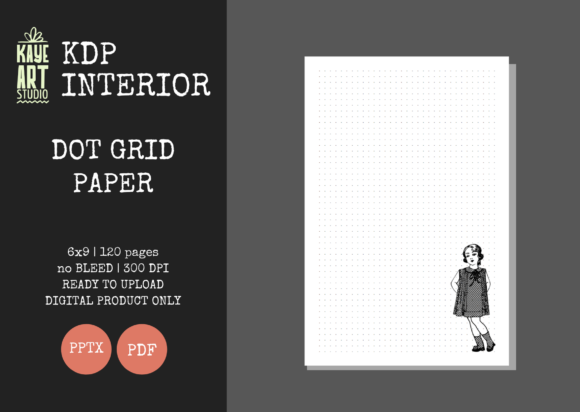
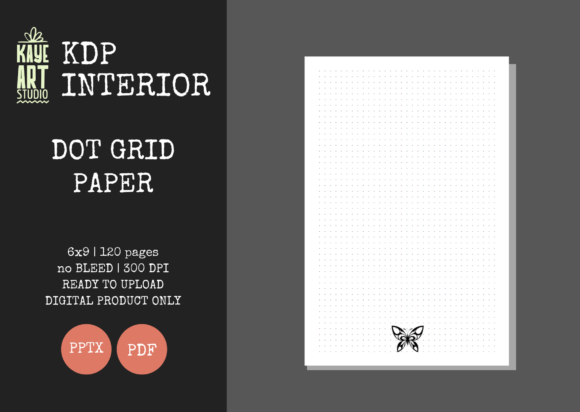
This resource is designed as a foundational interior for Amazon KDP, provided in both PDF and editable PPTX formats at 300 DPI. Unlike generic free downloads found on open repositories, KDP Dot Grid Paper 41 is pre-configured with "No Bleed" settings, addressing one of the most common rejection reasons for new publishers. However, having a technically correct file does not automatically guarantee market success. Publishers must evaluate how this specific dot grid variation compares to other spacing options, lined alternatives, and custom-designed interiors to determine if it aligns with their target audience's expectations.
Technical Specifications and Platform Compliance
The primary value proposition of KDP Dot Grid Paper 41 lies in its adherence to KDP’s strict printing guidelines. The 6x9 inch trim size is currently the industry standard for trade paperbacks and journals, striking a balance between portability and usable writing space. At 120 pages, this template maximizes the spine width potential without pushing the book into a higher printing cost tier that might erode royalties. For publishers focused on profit margins, this page count is often the mathematical sweet spot for no-bleed interiors.
The inclusion of an editable PowerPoint file distinguishes this asset from static PDF-only alternatives. While many publishers upload PDFs directly, the PPTX option allows for necessary customization. You can adjust margin guides, add branding elements to the footer, or modify the dot opacity before generating the final print-ready PDF. This flexibility is crucial because KDP’s automated review system checks margins dynamically based on page count. Having an editable source file ensures you can adapt KDP Dot Grid Paper 41 to future guideline updates without repurchasing or redesigning from scratch.
It is vital to note that this listing covers the interior only. Publishers accustomed to all-in-one bundles must remember to create or commission a separate cover. The no-bleed setting means all content must remain within the safe zone, typically requiring a minimum margin of 0.375 inches on the gutter side for a 120-page book. KDP Dot Grid Paper 41 accounts for this, but users adding custom headers or footers via the PPTX file must verify these safety zones independently to avoid printing errors.
Comparing Dot Grid Variations and Spacing
Not all dot grids serve the same user intent. When evaluating KDP Dot Grid Paper 41 against other options, spacing is the primary differentiator. Standard dot grids usually range from 4mm to 7mm. A 5mm grid is generally considered the universal standard for bullet journaling and general note-taking, while 7mm favors those with larger handwriting or who use thick markers. If KDP Dot Grid Paper 41 utilizes a specific spacing that deviates from the 5mm norm, it may appeal to a narrower demographic. Publishers should always print a test page at 100% scale to physically verify the spacing feels appropriate for the intended use case before listing.
Dot opacity is another subtle but significant comparison factor. High-contrast black dots provide clear guidance but can be visually distracting and may bleed through on standard 55# (90 GSM) white paper. Lighter gray dots are preferred by serious journalers because they recede visually when writing and scanning. When comparing KDP Dot Grid Paper 41 to competitors or free resources, assess whether the dot weight is optimized for KDP’s standard paper stock. If the dots are too dark, customers may leave negative reviews regarding visual clutter; if too light, they may complain about visibility. This specification often matters more than the grid geometry itself.
Alternative formats like isometric grids, quadrille (graph) paper, or Cornell notes layouts serve distinctly different purposes. Graph paper appeals to engineers and students requiring precision scaling, whereas dot grids support organic structuring and freeform diagramming. KDP Dot Grid Paper 41 is best positioned for the broad "productivity and mindfulness" category rather than technical drafting. If your research indicates a demand for specialized technical notebooks, a standard dot grid will likely result in returns, regardless of its print quality.
Strategic Fit: When to Use Versus When to Customize
KDP Dot Grid Paper 41 is an optimal choice for publishers prioritizing speed-to-market and volume. If you are testing multiple niches—such as gratitude journaling, fitness tracking, or meeting notes—using a verified, pre-formatted interior reduces production time from hours to minutes. The 300 DPI resolution ensures crisp printing, eliminating the blurriness that plagues upscaled low-resolution templates. For beginners or those scaling a catalog, this reliability outweighs the benefit of bespoke design.
However, there are scenarios where this template may be insufficient. Established brands often require proprietary layouts that include prompt sections, habit trackers, or indexed tables of contents integrated directly into the grid. KDP Dot Grid Paper 41 provides a blank canvas, which is excellent for versatility but lacks the structured scaffolding that defines premium guided journals. If your competitive analysis shows that top-selling books in your niche feature hybrid layouts (e.g., dot grid combined with weekly reflection prompts), relying solely on a pure dot grid interior may position your product as a commodity rather than a solution.
Furthermore, consider the saturation level of the generic dot grid market. Because templates like KDP Dot Grid Paper 41 lower the barrier to entry, thousands of identical interiors exist. To succeed, publishers using this base must compensate with exceptional cover design, superior keyword targeting, or unique bundling strategies. If you cannot differentiate the product externally, the internal uniformity becomes a liability. In highly saturated sub-niches, investing time in modifying the PPTX file to add unique value-add elements is often necessary to justify the purchase price to discerning buyers.
Evaluating Tradeoffs and Decision Factors
Choosing KDP Dot Grid Paper 41 involves balancing convenience against distinctiveness. The "No Bleed" configuration simplifies the upload process and reduces the risk of content being trimmed during binding, making it safer for less experienced publishers. However, no-bleed designs inherently limit aesthetic possibilities; you cannot have background colors or patterns extending to the page edge. If your brand identity relies on immersive, full-page artwork, you would need to seek a bleed-compatible alternative, accepting the increased complexity in file preparation and proofing.
Cost efficiency is another practical consideration. Using a pre-made, tested template eliminates the learning curve associated with setting up master slides in PowerPoint or InDesign. For publishers managing dozens of SKUs, this time savings translates directly to profitability. Conversely, professional designers may find the constraints of a pre-set template limiting. They might prefer to build a custom master file tailored to specific typographic hierarchies or branding guidelines. The decision ultimately rests on whether your bottleneck is production capacity or creative differentiation.
Finally, consider the longevity of the asset. KDP occasionally updates margin requirements and safe zone specifications. Assets that include editable source files, like the PPTX included with KDP Dot Grid Paper 41, offer insurance against obsolescence. Static PDFs purchased from vendors who do not provide updates carry a hidden long-term risk. When comparing options, prioritize vendors who demonstrate ongoing maintenance of their templates. A slightly higher upfront cost for an editable, maintained file is frequently more economical than replacing obsolete inventory later.
Making an Informed Selection
KDP Dot Grid Paper 41 serves as a reliable, compliant baseline for low-content publishing businesses. Its strengths lie in technical accuracy, editability, and alignment with standard 6x9 manufacturing specs. It is particularly well-suited for publishers validating new niches, expanding catalog volume, or those who lack advanced design software skills. The 120-page count and no-bleed setup minimize friction in the publishing workflow.
Yet, it is not a universal solution. Publishers targeting premium segments, requiring hybrid functionality, or needing full-bleed aesthetics should view this as a starting point rather than a final destination. By critically assessing spacing preferences, opacity levels, and market saturation in your specific niche, you can determine whether this template meets your strategic needs or if modification is required. Successful KDP publishing rarely depends on a single asset; it depends on matching the right tool to the specific demands of your audience and business model.