KDP Interior Unlined Journal Vol. 18: Streamlining Low-Content Publishing Workflows
For self-publishers and digital product creators, the bottleneck is rarely the idea; it is usually the execution. Sourcing reliable, high-resolution interiors that meet Amazon KDP’s strict printing specifications often consumes hours of formatting time that could be better spent on niche research, cover design, or marketing strategy. KDP Interior Unlined Journal Vol. 18 addresses this specific friction point by providing a pre-formatted, tested foundation for low-content books. This resource is not merely a blank template; it is a standardized asset designed to integrate seamlessly into professional publishing workflows, ensuring technical compliance while maintaining creative flexibility.
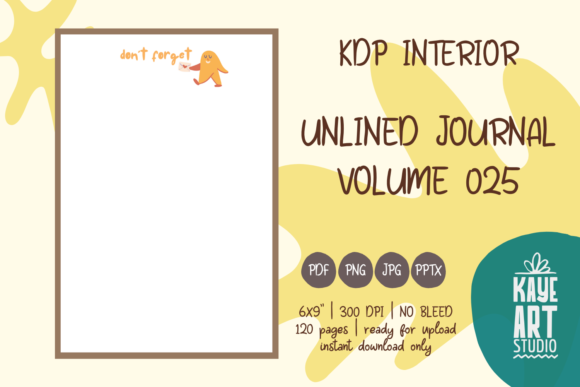
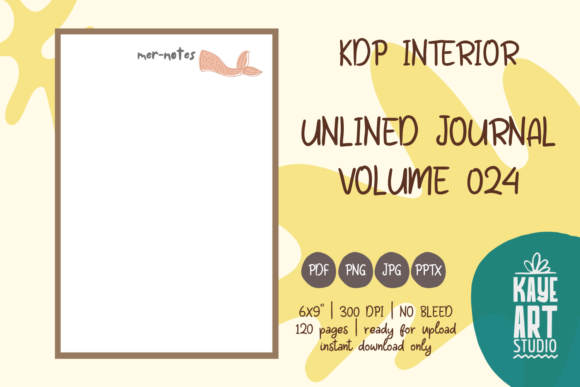
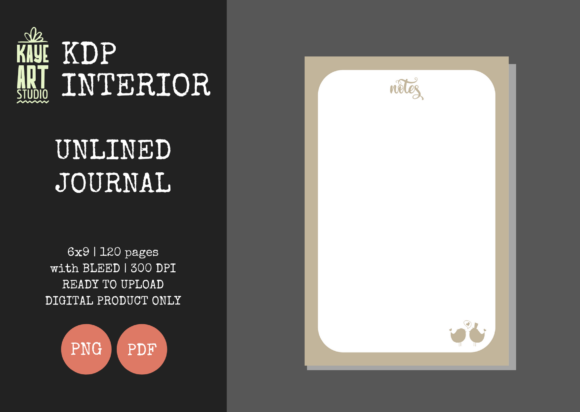
Understanding where this volume fits requires viewing it as a component in a larger production system rather than a standalone product. It serves as the structural backbone for journals, notebooks, sketchbooks, and planners. By utilizing a verified 6x9 inch trim size with no bleed settings across 120 pages, publishers eliminate the trial-and-error phase of margin adjustments and gutter safety checks. This allows creators to move directly from concept to upload-ready files, significantly reducing the turnaround time between identifying a market opportunity and listing a product for sale.
Technical Specifications and Quality Assurance
The primary value proposition of KDP Interior Unlined Journal Vol. 18 lies in its adherence to print-on-demand standards. Technical failures during the KDP review process are costly, resulting in rejected manuscripts, delayed launches, and wasted proof copies. This interior has been explicitly tested on KDP, mitigating the risk of formatting errors that plague DIY templates found online.
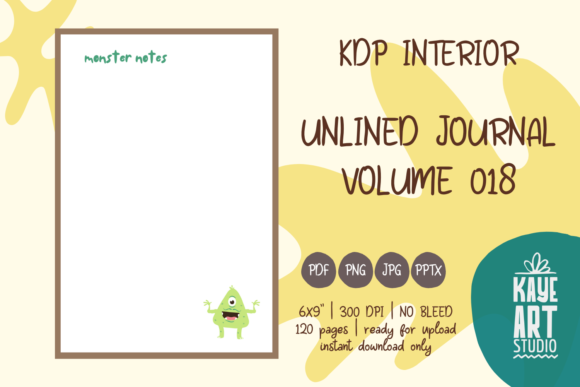
- Trim Size: 6x9 inches. This is the industry standard for trade paperbacks and journals, offering an optimal balance between portability and writing surface area.
- Bleed Settings: No Bleed. The content is contained entirely within the safe zone, ensuring no text or lines are trimmed during the binding process. This simplifies cover alignment and reduces margin-related rejections.
- Page Count: 120 pages. This length hits a sweet spot for perceived value and spine width. It is substantial enough to justify a mid-range price point but thin enough to keep printing costs low, maximizing royalty potential.
- Resolution: 300 DPI. High resolution is non-negotiable for crisp printing. While unlined pages may seem simple, low-resolution files can appear pixelated or grayish in print. This asset ensures sharp, clean page edges.
- File Formats: PNG, PDF, JPG, PPTX. Multi-format availability supports diverse software ecosystems, from Canva and PowerPoint to Adobe InDesign and Affinity Publisher.
It is critical to note that this listing covers the interior only. Publishers must create their own covers. This separation of assets is intentional, allowing for unlimited SKU variations using a single, reliable interior file. A creator can produce ten different journal covers targeting distinct niches—such as gratitude journaling, meeting notes, or sketching—all backed by the same technically sound Vol. 18 interior.
Integration Into Pre-Launch Research and Planning
Before designing a cover or writing a description, KDP Interior Unlined Journal Vol. 18 functions as a feasibility tool. During the niche validation phase, having a ready-to-use interior allows for rapid prototyping. Instead of spending days formatting a test book, publishers can generate a mockup or even order a physical proof immediately to assess paper quality, opacity, and binding feel relative to competitors.
This asset also aids in financial modeling. Because the page count (120) and trim size (6x9) are fixed variables, creators can instantly calculate printing costs and break-even points using the KDP Royalty Calculator. This removes guesswork from pricing strategies. When evaluating whether a new keyword cluster is worth pursuing, knowing your exact cost basis enables faster decision-making. If the projected margins align with business goals, the interior is already prepared, allowing the project to proceed without delay.
Execution Phase: Cover Design and Asset Compatibility
During the creation phase, compatibility determines workflow efficiency. The inclusion of PPTX and PNG formats alongside standard PDFs makes KDP Interior Unlined Journal Vol. 18 accessible to users across the skill spectrum. For marketers and entrepreneurs who rely on Canva or PowerPoint for speed, these editable formats allow for quick modifications if necessary, such as adding a "This Book Belongs To" page or custom branding elements without needing advanced vector software.
For professional designers using Adobe InDesign or Affinity Publisher, the high-resolution PDF serves as a master reference. Even if you prefer to build your own layout eventually, having a verified benchmark helps calibrate your own templates. You can overlay your designs against Vol. 18 to verify margins and safe zones visually. This cross-referencing acts as a secondary quality control measure, ensuring your custom work meets the same rigorous standards as the pre-tested volume.
Cover design integration is streamlined because the "No Bleed" specification defines clear boundaries. Designers do not need to account for complex wrap-around bleeds on the interior block, which simplifies the calculation of spine width and back cover dimensions. This reduces cognitive load during the design process, allowing focus to remain on typography, color psychology, and market positioning rather than technical geometry.
Post-Publication Workflow and Portfolio Scaling
After publication, KDP Interior Unlined Journal Vol. 18 continues to provide value through scalability. Successful low-content publishing relies on portfolio depth. Once a winning cover style or niche is identified, the ability to replicate success quickly is paramount. Using a consistent interior across multiple titles creates operational leverage. It standardizes the customer experience; buyers who purchase one of your journals know exactly what to expect regarding paper quality and page count when they buy another.
This consistency also simplifies advertising and analytics. When running Amazon Ads or external traffic campaigns, variable product quality can skew data. If one journal receives poor reviews due to formatting issues while another succeeds, it becomes difficult to isolate whether the ad creative or the product itself was the variable. By standardizing the interior with a tested asset like Vol. 18, publishers ensure that performance metrics reflect marketing effectiveness and cover appeal, not manufacturing inconsistencies.
Furthermore, this interior supports bundling and series creation. For educators or coaches creating companion workbooks, a uniform interior format provides a cohesive brand identity. It signals professionalism and attention to detail, traits that resonate with adult learners and professionals aged 20–50 who use these tools for serious productivity and development work.
Practical Implementation Tips for Publishers
To maximize the utility of this resource, consider the following implementation strategies within your existing workflow:
- Establish a Master Project File: Create a dedicated folder structure for Vol. 18 containing all source files (PDF, PPTX, PNG). Keep a record of the specific KDP test results and any personal notes on print proofs. This becomes your single source of truth, preventing version control issues later.
- Batch Process Covers: Since the interior dimensions are static, set up cover templates in your design software with pre-set guides for the 6x9 no-bleed configuration. This allows you to swap artwork rapidly without recalculating dimensions for every new title.
- Leverage Multiple Formats Strategically: Use the PDF for final KDP uploads to preserve vector sharpness and metadata. Reserve the PPTX or PNG versions for creating marketing mockups, social media previews, or Etsy listings where editability or transparency is required.
- Quality Control Checklist: Even though the file is tested, always run your final combined PDF (cover + interior) through KDP’s Previewer before publishing. Verify that the 120-page count matches your cover spine calculation exactly. Small discrepancies in paper type selection (e.g., cream vs. white) can alter spine width, so ensure your KDP setup matches the interior's intended paper stock.
- Niche Adaptation: While unlined, this interior can be positioned for various uses through metadata and cover design. Market it as a "Composer Notebook" for musicians, a "Field Notes" journal for researchers, or a "Sketchbook" for artists. The versatility of the blank page is an asset, not a limitation, provided the external packaging speaks to the specific user intent.
Evaluating Long-Term Viability and Efficiency
In the context of building a sustainable publishing business, reliance on verified assets like KDP Interior Unlined Journal Vol. 18 is a risk management strategy. Trends change, and niches saturate, but technical standards remain relatively constant. Investing time in mastering a compliant, high-quality interior template yields compounding returns. Every hour saved on formatting is an hour invested in audience building, keyword optimization, or product diversification.
For freelancers and agencies managing multiple client accounts, this interior provides a baseline deliverable. It ensures that regardless of the client's niche, the fundamental product quality remains high. This reliability builds trust and facilitates long-term retainer relationships. Similarly, for hobbyists transitioning to commercial publishing, starting with a professional-grade interior bridges the gap between amateur experimentation and viable product development.
Ultimately, KDP Interior Unlined Journal Vol. 18 represents more than just 120 blank pages. It is a workflow accelerator that embodies best practices in low-content publishing. By handling the technical complexities of trim size, bleed, and resolution upfront, it frees creators to focus on what truly drives sales: compelling covers, precise targeting, and authentic connection with their audience. Whether used as a primary product foundation or a testing ground for new ideas, its role in the modern publisher’s toolkit is both practical and strategic.