Streamlining Your Low Content Publishing with KDP Dot Grid Paper 14
Success in the Amazon KDP low and no-content book market often comes down to two factors: speed of production and interior quality. While creating unique covers is an art form that demands significant creative energy, the interior pages should be a streamlined, reliable foundation rather than a bottleneck. This is where specialized assets like KDP Dot Grid Paper 14 become essential tools for serious publishers. Rather than spending hours adjusting margins or worrying about bleed settings, utilizing a pre-formatted, tested template allows you to focus your resources on niche research and cover design.
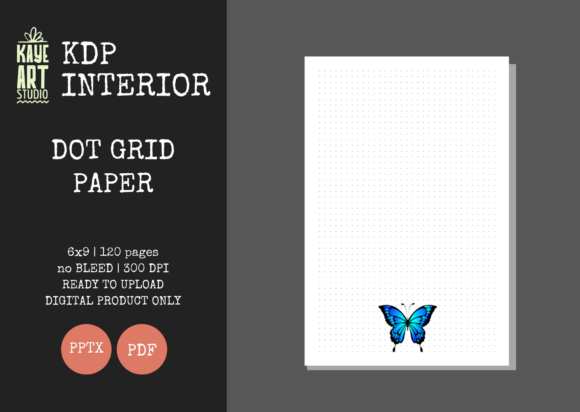
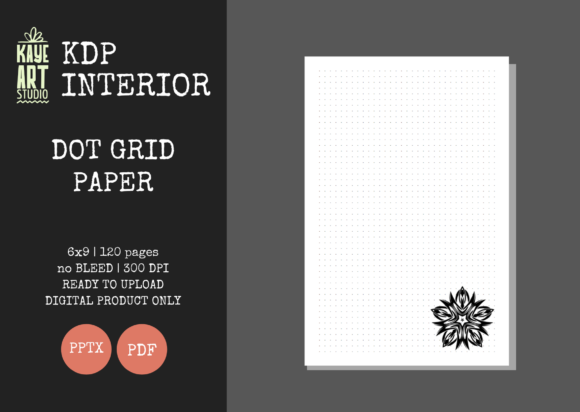
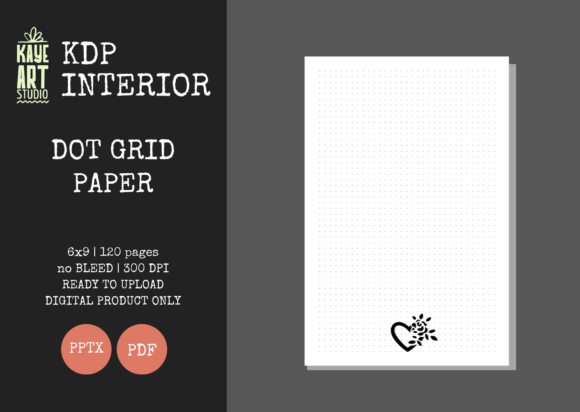
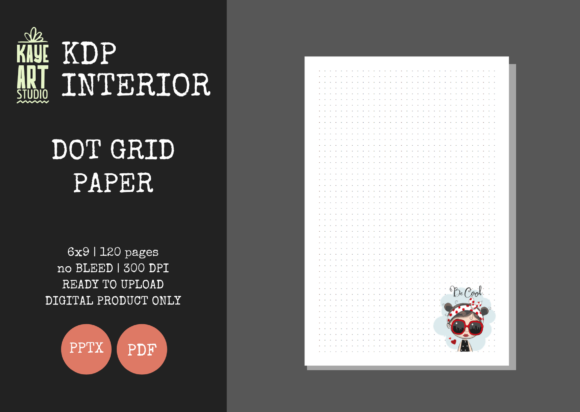
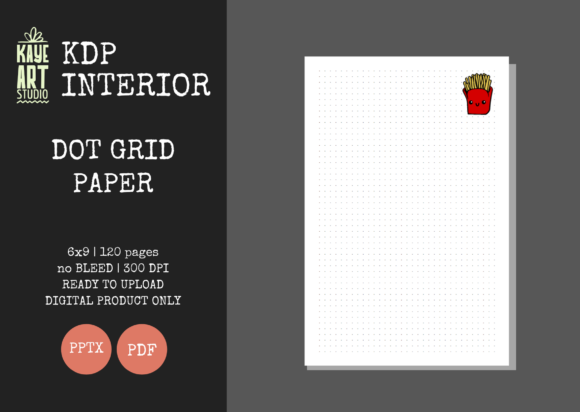
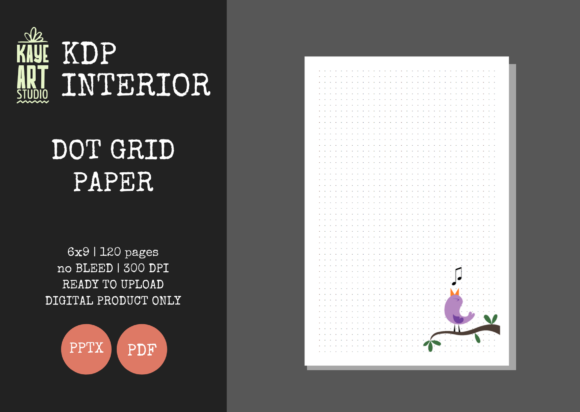
The specific configuration of this dot grid journal—featuring a 6x9 inch trim size, 120 pages, and no bleed settings—addresses some of the most common technical hurdles new publishers face. It serves as a practical bridge between the idea phase and the upload phase, ensuring that your product meets Amazon’s rigorous printing standards right out of the box.
Technical Specifications That Prevent Rejection
One of the most frustrating experiences for KDP creators is receiving an error message during the upload process. Margins that are too narrow, resolution issues, or incorrect bleed configurations can stall a launch indefinitely. The KDP Dot Grid Paper 14 template is engineered specifically to mitigate these risks. With a resolution of 300 DPI, the dot pattern prints crisply without appearing pixelated or muddy, which is a frequent complaint with lower-quality free alternatives found online.
The decision to utilize a "No Bleed" setting for this 6x9 interior is strategic. For dot grid journals, keeping the content within the safe zone ensures that the dots remain consistent and uncluttered by the binding gutter or trim edge. This provides a superior user experience for the end customer, who expects clean, usable space for note-taking, sketching, or bullet journaling. By adhering to these precise specifications, the file has been tested on KDP to ensure compatibility, saving you from the trial-and-error testing phase that consumes valuable publishing time.
Understanding the 6x9 Trim Size Advantage
While there are many sizes available for notebooks, the 6x9 inch format remains the industry standard for trade paperbacks and portable journals. It strikes an ideal balance between portability and utility. A notebook this size fits easily into backpacks, purses, and even large coat pockets, making it a versatile companion for students, professionals, and creatives alike.
From a publishing economics perspective, 6x9 is also highly efficient. It optimizes page count relative to spine width, giving the book enough physical presence on a shelf or in search results thumbnails without driving up printing costs excessively. When you use KDP Dot Grid Paper 14, you are leveraging a form factor that customers already recognize and trust. The 120-page count further enhances this value proposition, offering substantial content without pushing the book into a higher pricing tier due to excessive thickness.
The Strategic Value of Editable PPTX Files
Perhaps the most significant feature of this listing is the inclusion of an editable PowerPoint (PPTX) file alongside the ready-to-upload PDF. Many low-content interiors are sold as static PDFs only, which limits your ability to differentiate your product. If every publisher uses the exact same static interior, competition becomes solely a race to the bottom on price.
Having access to the source PPTX file transforms KDP Dot Grid Paper 14 from a simple template into a flexible design asset. You can modify the dot spacing, adjust the opacity of the grid, add headers and footers, or insert branding elements directly into the master slides. This capability allows you to create variations from a single base file. For example, you could create one version with faint gray dots for artists and another with darker dots for writers, all while maintaining the correct margin and safety guidelines established in the original template.
- Customization: Adjust dot color, size, and spacing to suit specific niches.
- Branding: Add subtle watermarks or logo placements to build brand recognition.
- Variation Creation: Generate multiple SKU options from a single verified layout.
- Efficiency: Edit master slides to apply changes across all 120 pages instantly.
Workflow Integration for Volume Publishers
For those managing a portfolio of hundreds of books, workflow efficiency is paramount. Manually formatting individual pages is not scalable. Integrating pre-verified assets like KDP Dot Grid Paper 14 into your production pipeline allows for batch processing. Because the file structure is standardized, you can develop a repeatable system for cover creation and metadata entry that pairs seamlessly with this interior.
This approach aligns with modern digital publishing workflows where modularity is key. Just as software developers use libraries to avoid rewriting code, KDP publishers should use verified interior templates to avoid reformatting pages. The time saved on technical adjustments can be reinvested into keyword research, advertising campaigns, or designing high-conversion covers, which ultimately drive sales more effectively than tweaking margin settings.
Niche Applications for Dot Grid Interiors
Dot grid paper occupies a unique sweet spot in the stationery market. Unlike lined paper, which dictates horizontal writing, or blank paper, which offers no guidance, dot grids provide structure without restriction. This versatility makes KDP Dot Grid Paper 14 suitable for a wide array of micro-niches beyond general note-taking.
Consider the bullet journaling community, which relies heavily on dot grids for creating custom layouts, habit trackers, and calendars. A standard dot grid interior serves as the perfect canvas for these users. Similarly, designers and architects often prefer dot grids for sketching because the points serve as alignment guides without interfering with visual lines. Math students and STEM professionals also favor this format for graphing and diagramming where precision matters but rigid grid lines feel too constraining.
By understanding these specific use cases, you can tailor your cover designs and marketing keywords to target distinct audiences using the same high-quality interior. The neutral nature of the dot grid means you aren't locked into a single demographic; the asset adapts to whatever niche strategy you choose to pursue.
Cover Design Considerations for Interiors-Only Assets
It is crucial to remember that this listing provides the interior files only. You must create your own cover. This separation of concerns is actually beneficial for SEO and conversion. Amazon’s algorithm and human shoppers judge a book primarily by its cover. Using a generic, bundled cover often signals "low quality" to potential buyers.
When designing a cover for KDP Dot Grid Paper 14, ensure your spine calculation matches the 120-page count at 6x9 dimensions. Since the interior is no-bleed, your cover file will still require bleed, but the interior alignment will remain safe. Always verify your cover dimensions against the current KDP calculator before uploading, as paper thickness can vary slightly based on ink type and region. Pairing a professionally designed, niche-specific cover with this technically sound interior creates a cohesive product that looks professional both in digital thumbnails and in physical print.
Quality Assurance and Customer Satisfaction
In the low-content space, reviews make or break a title. Negative reviews frequently cite poor print quality, misaligned margins, or dots that are too dark or too faint. Utilizing a tested asset like KDP Dot Grid Paper 14 significantly reduces the likelihood of these manufacturing-related complaints. The 300 DPI specification ensures that the dots are sharp, while the tested margins guarantee that nothing gets lost in the binding.
Customer satisfaction in this category is driven by usability. When a buyer opens their journal and finds consistent, well-placed dots that facilitate their work or creativity, they are more likely to leave positive feedback and return for future purchases. Investing in premium, verified interiors is essentially investing in your long-term reputation as a publisher. It shifts the focus from fixing technical errors to building a sustainable catalog of products that customers genuinely enjoy using.