Designing a Functional Nature Exercise Journal: Technical Specifications for KDP Interiors
The intersection of physical wellness and outdoor mindfulness has created a sustained demand for specialized tracking tools. For self-publishers and print-on-demand (POD) entrepreneurs, the Nature Exercise Journal represents a distinct niche within the low-content book market. Unlike generic fitness logs or standard nature diaries, this hybrid format serves users who engage in activities like trail running, forest bathing, hiking, and outdoor yoga. Success in this category relies less on artistic cover design and more on the functional utility of the interior pages. Providing a ready-to-use PDF file with precise technical specifications allows creators to bypass the steep learning curve of layout design and focus on marketing and audience targeting.
Anatomical Breakdown of the 100-Page Interior
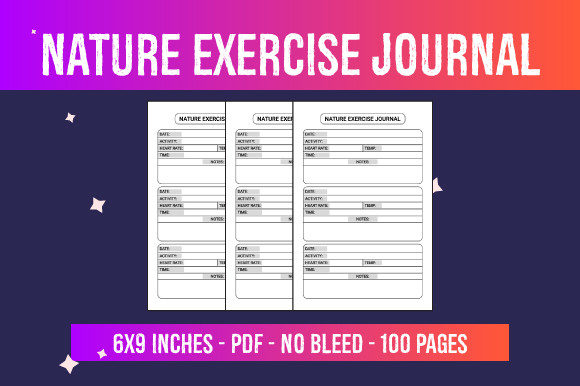
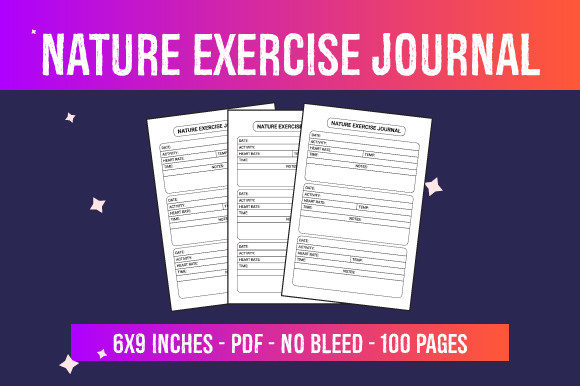
A high-quality KDP interior is not merely a collection of blank lines; it is a structured user interface printed on paper. When utilizing a pre-formatted 100-page template for a Nature Exercise Journal, understanding the specific page architecture is essential for verifying quality and ensuring customer satisfaction. The most effective interiors in this niche balance data entry with reflective space, acknowledging that outdoor exercise is often as much about mental health as it is about physical metrics.
Daily Activity and Environment Tracking
The core utility of these journals lies in their ability to correlate physical exertion with environmental conditions. A professional-grade template includes dedicated fields that go beyond simple repetition counts or distance markers. Key elements found in superior interiors include:
- Biotic and Abiotic Observations: Specific prompts for recording weather patterns, temperature, humidity, and wind speed, alongside sections for noting wildlife sightings, flora identification, or seasonal changes encountered during the workout.
- Terrain and Elevation Metrics: Unlike gym-based journals, nature exercise logs require space for mapping routes, noting surface types (mud, rock, pavement), and tracking elevation gain, which significantly impacts exertion levels.
- Sensory Check-ins: Prompts designed to capture the qualitative experience of the session, such as sounds heard, scents detected, or the subjective feeling of connection to the landscape, supporting the growing trend of ecotherapy.
- Physical Output Data: Standardized tables for heart rate zones, duration, perceived exertion (RPE), and hydration levels, formatted to allow quick entry even when the user is fatigued or in variable lighting conditions.
Reflective and Progress Review Sections
To maximize the value of a 100-page count, the interior should include periodic review mechanisms. Continuous daily logging without synthesis leads to abandoned journals. Strategic placement of weekly or monthly reflection spreads transforms a simple logbook into a longitudinal study of personal health. These pages typically feature unlined or dot-grid areas for freeform writing, goal reassessment, and sketching maps or botanical specimens. This variation in page layout also prevents visual fatigue and maintains user engagement over the lifespan of the book.
Technical Compliance: Dimensions, Bleed, and Resolution
For publishers using Amazon KDP or similar POD services, technical precision is non-negotiable. A ready-to-use PDF must adhere to strict manufacturing standards to avoid rejection or poor print quality. The 6″ x 9″ trim size is the industry standard for portable journals, offering an optimal balance between writing surface area and backpack compatibility. However, dimensions alone do not guarantee a viable product.
Understanding Bleed vs. No Bleed Configurations
The distinction between bleed and no-bleed files is a common point of failure for new publishers. A comprehensive digital asset package should clarify or provide options for both:
- No Bleed Interiors: In this configuration, all text, lines, and graphics remain at least 0.375 inches (9.5 mm) from the outer edge of the page. This creates a safe white margin that accommodates slight shifts during the trimming process. For a Nature Exercise Journal, no-bleed is often preferred as it provides a clean, framed look that mimics traditional field guides and ensures no critical writing prompts are severed during binding.
- Bleed Interiors: If the design includes background textures, full-page illustrations of landscapes, or lines that extend to the very edge of the paper, the PDF canvas must be larger than the final trim size (typically 6.125″ x 9.25″ for a 6″ x 9″ book). This extra area is trimmed off after printing. Using a bleed-ready file is essential for immersive designs but requires exact alignment to prevent white borders from appearing unintentionally.
Resolution and File Integrity
Print clarity directly influences user perception of value. Low-resolution interiors result in pixelated lines and fuzzy text, which renders a journal unusable for detailed tracking. High-resolution PDF files for KDP must meet specific benchmarks:
- DPI Standards: All interior elements must be rendered at a minimum of 300 DPI (dots per inch) at actual size. While screens display images clearly at 72 or 96 DPI, print requires higher density to produce crisp lines suitable for handwriting.
- Vector vs. Raster: Superior templates utilize vector graphics for lines, boxes, and text. Vectors remain perfectly sharp regardless of scaling, whereas rasterized images can degrade. Ensuring the PDF preserves vector data is crucial for the professional appearance of grid lines and typography.
- Color Space: Even for black-and-white interiors, files should be checked for proper grayscale conversion. Rich black values ensure that lines appear solid rather than washed out, while avoiding excessive ink coverage that could cause bleed-through on standard 55# or 60# cream paper commonly used for journals.
Market Positioning and Audience Relevance
Creating a Nature Exercise Journal is not just about assembling pages; it is about solving a specific problem for a defined audience. The versatility of a well-designed 100-page template allows it to serve multiple demographics, each with distinct needs. Understanding these use cases helps in selecting the right interior and crafting effective metadata.
Diverse User Applications
The broad appeal of this journal type stems from its adaptability. Professionals in wellness and education, as well as individual consumers, utilize these tools differently:
- Ecotherapists and Wellness Coaches: Practitioners often recommend these journals to clients as part of prescribed nature-based interventions. They require interiors that facilitate structured reflection and mood tracking correlated with time spent outdoors.
- Citizen Scientists and Researchers: Field researchers and hobbyist naturalists use exercise journals to combine personal fitness tracking with observational data collection. Templates that include space for species notes or GPS coordinates serve this dual purpose effectively.
- Outdoor Educators and Group Leaders: Teachers leading wilderness programs utilize bulk purchases of these journals for student reflection. Clean, intuitive layouts are essential for younger users or those new to journaling practices.
- Mindful Athletes: Trail runners, hikers, and cyclists seek to document training loads alongside the restorative benefits of their environment. They value durability and efficient data entry fields over decorative elements.
Implementation Workflow for Publishers
Acquiring a ready-to-use PDF significantly streamlines the publishing workflow, but it does not eliminate the need for due diligence. Publishers should follow a systematic approach to ensure the final product meets market expectations and platform requirements.
- File Verification: Before uploading, open the PDF in professional software (such as Adobe Acrobat Pro) to verify page count, trim size, and resolution. Use KDP’s previewer tool to check for margin warnings or bleed errors specific to the selected paper type.
- Cover Alignment: The cover design must be calculated based on the exact page count and paper thickness of the 100-page interior. Using a cover template generator with the correct spine width calculation prevents misalignment between the cover art and the interior block.
- Keyword Optimization: When listing the journal, semantic keywords should reflect the hybrid nature of the product. Terms like "outdoor fitness tracker," "hiking logbook," "nature therapy journal," and "wilderness wellness diary" capture long-tail search intent better than generic terms.
- Sample Review: Always order a physical proof copy. Digital previews cannot replicate the tactile experience of writing on paper. Verify that line weights are appropriate for pen or pencil, that margins allow for comfortable writing near the binding gutter, and that the paper opacity prevents show-through.
Strategic Advantages of Pre-Formatted Interiors
Utilizing professionally designed, ready-to-use PDF files offers significant strategic advantages over custom creation or public domain sourcing. Time-to-market is drastically reduced, allowing publishers to capitalize on seasonal trends such as spring hiking season or New Year wellness resolutions. Furthermore, professionally structured interiors reduce the risk of negative reviews related to usability issues, which are common in low-content books with poorly thought-out layouts.
The 100-page count is strategically chosen to fit within cost-effective printing tiers while providing sufficient duration for habit formation. Books that are too thin perceive as lacking value, while those exceeding 120 pages may become too bulky for field use. This sweet spot ensures competitive pricing and practical portability. Additionally, having a standardized interior allows for series development; publishers can create variations with different covers targeting specific sub-niches (e.g., birdwatching fitness, alpine trekking, beach walking) while maintaining consistent interior quality and reducing design overhead.
Ultimately, the success of a Nature Exercise Journal in the POD ecosystem depends on the seamless integration of form and function. By prioritizing technical accuracy in dimensions and resolution, and by selecting interiors that genuinely support the dual goals of physical tracking and nature connection, publishers can create products that offer lasting value to users. The availability of high-quality, ready-to-use assets democratizes access to this market, enabling creators to focus on building brands and serving communities passionate about the convergence of health and the natural world.