Metal Detecting Log Book Interior: Streamlining KDP Production for Niche Hobby Journals
Creating a successful low-content book on Amazon Kindle Direct Publishing (KDP) requires more than just uploading a generic lined notebook. For specific niches like metal detecting, success depends on providing functional utility that solves a user's problem in the field. The Metal Detecting Log Book Interior serves as the structural foundation for this product category. It is a pre-formatted, 100-page PDF asset designed to bridge the gap between a digital file and a physical tool used by hobbyists to track finds, locations, and equipment settings. For publishers and creators, this interior eliminates the most time-consuming phase of book production: layout design and pagination.
In the broader workflow of Print on Demand (POD) publishing, this interior acts as a standardized component. Rather than designing tables, headers, and input fields from scratch for every new title, creators utilize this ready-to-use asset to focus on market differentiation through cover design and keyword strategy. The 6″ x 9″ dimension is the industry standard for portable field journals, balancing writing space with pocketability. By integrating a high-resolution, no-bleed PDF into your publishing process, you ensure technical compliance with KDP requirements while delivering a specialized product that appeals to serious metal detectorists looking to organize their data systematically.
Technical Specifications and Pre-Publishing Workflow
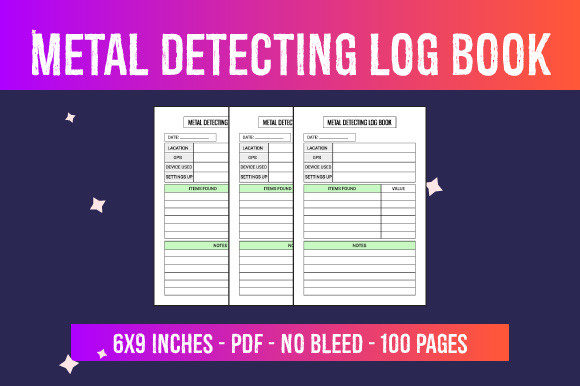
Before initiating any design work, understanding the technical parameters of the Metal Detecting Log Book Interior is essential for avoiding rejection during the KDP review process. This specific asset is configured at 6″ x 9″ inches with no bleed. This distinction dictates how you prepare your cover file and set up your book details in the KDP dashboard. No bleed means all content, including page numbers and table borders, sits safely within the margins, leaving a white border around the edge of the printed page. This is generally preferred for logbooks as it prevents critical data fields from being trimmed off during manufacturing.
When setting up your project, select "No Bleed" in the KDP print options. If you are designing a wraparound cover, calculate your spine width based specifically on the 100-page count. Using a page count calculator or KDP’s template generator is necessary here; selecting the wrong page count will result in a misaligned spine. The high-resolution nature of the PDF ensures that lines and text remain crisp at print size. Low-quality source files often appear pixelated or gray rather than black when printed, which leads to negative reviews. Always verify the PDF properties to confirm 300 DPI resolution before upload.
Integration with other tools is seamless because the file is a standard PDF. You do not need proprietary software to modify or inspect it. Adobe Acrobat Reader, Preview (Mac), or browser-based PDF viewers are sufficient for quality control checks. Before publishing, open the file and zoom to 100% to inspect line weights and font legibility. Ensure that the binding gutter margin provides enough space for users to write near the spine without obstruction. This pre-flight check takes minutes but safeguards the long-term reputation of your publishing brand.
Functional Design and User Experience in the Field
The value proposition of a Metal Detecting Log Book Interior lies in its specific relevance to the end-user's activity. Generic notebooks fail to capture the nuance of treasure hunting. A purpose-built interior includes dedicated fields that mirror the mental checklist of a detectorist. When evaluating or utilizing this interior, consider how the layout facilitates data entry in outdoor environments. Users are often standing, wearing gloves, or dealing with variable lighting. The form fields must be spacious enough for quick handwriting yet structured enough to maintain organized records over months of use.
Typical functional elements included in these specialized interiors address key tracking needs:
- Location Data: Fields for GPS coordinates, site names, and permission status help users return to productive spots legally and accurately.
- Equipment Settings: Sections to record detector model, coil size, discrimination patterns, and sensitivity levels allow users to replicate successful setups.
- Find Details: Structured areas for item description, depth, target ID numbers, and historical context turn random discoveries into a researchable database.
- Environmental Conditions: Tracking soil type, moisture levels, and weather helps correlate find rates with ground conditions.
This structure transforms the book from a passive diary into an active analytical tool. For the publisher, this means the marketing copy can highlight specific features rather than vague benefits. You are selling a system for improving detection skills through record-keeping, not just paper. Understanding this user intent allows you to position the book correctly against competitors who may offer less thoughtful layouts.
Strategic Integration into POD Business Operations
For entrepreneurs and small business owners, the Metal Detecting Log Book Interior functions as a scalable asset within a larger catalog strategy. Because the interior is static and ready-to-use, it enables rapid iteration on the front end. In the low-content niche, the cover is the primary conversion driver. With the interior secured, you can test multiple cover designs, titles, and subtitle variations without altering the manuscript. This decoupling of content creation from product testing significantly accelerates the feedback loop.
Consider the efficiency gains in batch production. If you manage a portfolio of hobbyist journals, having pre-vetted interiors reduces cognitive load. You can schedule cover design sessions knowing the internal specifications are fixed. This consistency also aids in building series. A metal detecting logbook can be paired with a gold panning journal or a rock tumbling record book, all sharing similar trim sizes and production standards. Cross-promotion becomes easier when products share a cohesive physical format and quality baseline.
Quality control extends beyond the file itself to the customer experience. Since you cannot physically inspect every POD unit, rely on the proofing tools provided by Amazon. Order a physical proof copy of the Metal Detecting Log Book Interior before launching ads or expanding the line. Test the usability yourself: write in it with different pens, check if the paper ghosting affects the next page, and verify that the binding opens flat enough for comfortable use. This hands-on validation informs better product descriptions and helps identify potential improvements for future editions.
Optimizing for Discoverability and Long-Term Value
While the interior file is a technical asset, its contents drive SEO and discoverability. Amazon’s algorithm indexes the content of look-inside previews and detailed descriptions. When listing a book using this Metal Detecting Log Book Interior, describe the specific fields and organizational systems contained within. Use semantic keywords naturally: "target ID logging," "GPS waypoint tracker," "detector settings journal," and "relic hunting record." These terms connect your product with specific search queries rather than broad, competitive terms like "notebook."
Long-term viability in the POD space requires treating these books as evergreen assets. Metal detecting is a seasonal but perennial hobby. Unlike trend-based merchandise, a well-designed logbook remains relevant year after year. To maximize this lifespan, avoid dating the cover or interior. Keep the design timeless so inventory never becomes obsolete. Update metadata periodically to reflect current search trends or new terminology emerging in the detecting community, but leave the core interior functionality intact.
Customer feedback loops are critical for refining your offering. Monitor reviews specifically for comments about the interior layout. If users consistently mention wishing for a specific column or more space for sketches, note this for future versions. Even with a ready-to-use PDF, market responsiveness distinguishes professional publishers from amateurs. You might eventually create a "Version 2.0" based on real user data, turning a static asset into a dynamic product line that evolves with its audience.
Implementation Checklist for Publishers
Integrating the Metal Detecting Log Book Interior into your workflow requires attention to detail at every stage. Use this practical checklist to ensure smooth execution:
- Verify File Integrity: Confirm the PDF is 6x9 inches, 100 pages, and high-resolution before starting cover design.
- Match Cover Template: Generate a KDP cover template specifically for 100 pages, no bleed, white paper.
- Conduct Visual QC: Zoom to actual size to check line sharpness and margin safety.
- Draft Feature-Rich Description: List specific interior fields in bullet points to aid search indexing and buyer confidence.
- Select Precise Categories: Choose subcategories related to metal detecting, archaeology, or outdoor hobbies rather than general journals.
- Order Physical Proof: Validate usability, paper quality, and binding before enabling expanded distribution.
- Archive Source Files: Maintain organized records of which interior version pairs with which ISBN for future reprints or updates.
By treating the Metal Detecting Log Book Interior as a professional component rather than a shortcut, you build a sustainable publishing operation. The goal is to deliver genuine utility to the metal detecting community while maintaining efficient production standards. This balance of user-centric design and operational discipline is what separates profitable KDP businesses from saturated marketplaces. The ready-to-use nature of the file handles the heavy lifting of formatting, freeing you to focus on connecting the right product with the right audience through strategic presentation and marketing.